









Confession 101: A Catholic vs Protestant Understanding of the Sacrament
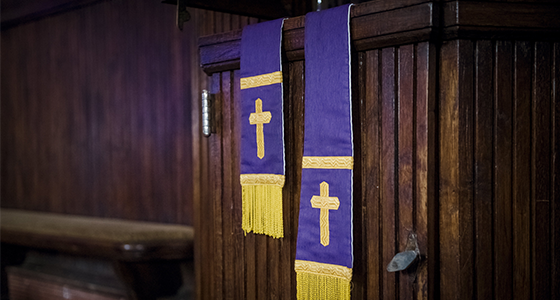
Let's take a look at the differences between the Catholic and Protestant understanding of the Sacrament of Confession.
If Protestantism is true, the power that Jesus gave men to forgive sins died with the apostles.
For Protestants, it seems clear from the New Testament that God forgives sin directly, without agents or intermediaries. The whole point of Jesus’ becoming man, after all, was to reveal to us that we now had direct access to God. Matthew’s Gospel describes the temple veil being torn in two at Christ’s death, demonstrating that the separation between man and God was now overcome. Further, nowhere in the Bible is there an explicit description of the Catholic confession ritual. Sacramental confession may have been an ancient practice, but this was simply another corruption in the early Church.
Sacrament Retained, Sacrament Discarded
At first, Martin Luther actually retained the sacrament of confession, along with the Eucharist and baptism. But since it depended on an ordained clergy, and one of Luther’s key points was the rejection of any distinction between clergy and laity, he ultimately decided that the sacrament had to go. The rest of Protestantism, as it had done on so many other fundamental doctrines, followed his lead.
Perhaps above all others, this sacrament incenses Protestants, who believe that since only God forgives sin, going to a mere human being to receive forgiveness is unbiblical. True, John 20:21–23 seems support it:
(Jesus) said to them again, “Peace be with you. As the Father has sent me, so I send you.” And when he had said this, he breathed on them and said to them, “Receive the Holy Spirit. Whose sins you forgive are forgiven them, and whose sins you retain are retained.”
But many Protestants interpret this passage as saying that when we proclaim the gospel to people, we are in effect declaring that their sins are forgiven (if they accept it) or declaring that God has not forgiven them (if they reject it). Similarly, to them the passages where Jesus gives the apostles authority to “bind and loose” (Matt. 16:19, 18:18) are about declaring what God has already decided in heaven. Thus God does not use people as agents for forgiving sins; rather we’re just messengers of the forgiveness that God grants.
Other Protestants find that interpretation to be a stretch and claim that God did use the apostles as instruments of forgiveness sins but that this ability was given only to the apostles. When the last one died, the power of forgiveness died with him. (This is another dispensational theory, like Calvin’s rejection of anointing of the sick).
Because Catholicism is true, God chooses to work through man, to share the gospel, to be his hands and feet, and even to forgive sins.
In the sacrament of confession, the repentant Christian confesses his sins to a priest, and the priest, acting with Christ’s divine authority, forgives him and reconciles him to Christ’s Church (which he wounded by his sin). It must be understood aright that it is God who forgives sins, but, as he does in so many other ways, God chooses to communicate his grace through human instruments. Scripture indeed teaches that only God can forgive sin; on this Catholics agree with Protestants. But Scripture also teaches that he gives shares this divine authority with his chosen human ministers.
Protestant interpretations of John 20:21–23, although not completely outside the realm of possibility, are not the most straightforward way to understand the passage. What if it simply means what it clearly says, and nothing more or less? The Bible says that Jesus gave his apostles the power to forgive sins, and neither Scripture nor common sense leads us to conclude that this power disappeared in the first century.
Unsurprisingly, this is exactly how the early Christians seemed to understand it. St. Ambrose wrote in the 300s about confession and the power God gives to priests to forgive (or not forgive) sins in his name:
Consider, too, the point that he who has received the Holy Ghost has also received the power of forgiving and of retaining sin. For thus it is written: Receive the Holy Spirit: whosesoever sins you forgive, they are forgiven unto them, and whosesoever sins you retain, they are retained. . . . The office of the priest is a gift of the Holy Spirit, and his right it is specially to forgive and to retain sins.”
Hippolytus, Tertullian, Origen, and many other early Christians confirmed the practice of sacramental confession to a priest.
It must be noted that this God’s ordinary means of bestowing the grace of forgiveness. A Protestant who wholeheartedly and humbly confesses his sins as he has been taught to confess (which varies greatly within Protestantism) doesn’t necessarily miss out on forgiveness. God is never bound by his own designs. At the very least, though, the Protestant does miss out on the peace that Catholics enjoy as they leave the confessional with the freedom of knowing that they have been forgiven.
Catholics can agree that the temple veil’s being torn in two does demonstrate that, through Christ, we now have direct access to God. In no way can this be construed to mean, however, that God then quit using men as instruments of salvation. If anything, Christ’s Incarnation suggests the opposite. God chose to save us through a man, the God-Man, providing us a supreme example of human cooperation with divine grace.
Finally, we should recognize that sacramental confession does not rule out confessing our sins privately to God as well. Catholics can and do directly pray to God daily and have a relationship with him, but this relationship is not just about “me and Jesus.” It involves the Body of Christ, the Church, and it honors Jesus’ decision to work through people to administer grace.
The Protestant’s Dilemma
If Protestantism is true, even though the Bible says Jesus gave men the power to forgive sins, and the early Church exercised this power, the sacrament of confession was an evil perversion only done away with in the sixteenth century when the Protestant Reformers rejected it. Christians for 1,500 years lived under the delusion that when they confessed their sins to a priest, they were truly forgiven by God, when in reality they were placing their trust in a false human tradition that imperiled countless millions of souls.
Want to know more?
Order your copy of Devin Rose's must-have book The Protestant's Dilemma
Recent Posts
-
Choirs of Angels in Scripture
The phrase choirs of angels does not mean a number of angels singing, as they did to announce to th …Mar 24th 2026 -
Explaining Apparitions and Visions of Angels
Church teaching, including Scripture and Tradition, holds that angels are purely spiritual beings. …Mar 15th 2026 -
Where Demons Dwell
And the great dragon was thrown down, that ancient serpent, who is called the Devil and Satan, the …Mar 5th 2026