









Jesus the Messiah
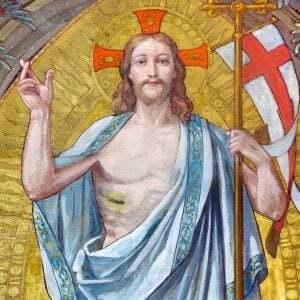
Why should I believe that Jesus is the Jewish Messiah?
In Judaism, the Messiah has been understood a number of ways, and there is no single understanding of messianic prophecy or what the Messiah will do. Jesus did not wish to be a political revolutionary at his first coming, but the Christian faith holds that he will dramatically reorder world affairs at his second. He has already given us abundant evidence by fulfilling numerous messianic prophecies, both clear and less clear, both inside and outside the Jewish scriptures.
A particular way he did this was through his death and resurrection. The Jewish scriptures contain prophecies that the Messiah will die, rise, and begin an eternal reign, with Gentiles coming to worship the God of Israel. Jesus fulfilled this through his death, resurrection, ascension, and the resulting spread of the Christian message among the nations.
Although only those who witnessed his earthly ministry had the opportunity to see his miracles for themselves, even today the Resurrection is accessible to us. We have looked at the alternatives to the Resurrection, and none of the natural explanations fits the evidence. They all have serious problems. None of the natural proposals explains the data, which indicates that the Resurrection was a genuinely supernatural event. Jesus really did rise from the dead by the power of God!
This shows us that Jesus had a place in God’s plan, and so he is the one best qualified to explain what his role is. Jesus indicated that he is the Messiah, both the Son of God in a unique sense as God incarnate and the Son of Man who sits enthroned beside God in heaven.
It is worth underscoring that a Class 1 (clear) messianic prophecy declares that, in the messianic age, “the earth shall be full of the knowledge of the Lord as the waters cover the sea” (Isa. 11:9; cf. Hab. 2:14).
When this prophecy was given, the number of people who believed in the God of Abraham was vanishingly small. The vast majority of people were polytheists, and the world was covered in pagan darkness. Today, the situation is different. Half of the human race worships the God of Abraham, and the rest of the world population has heard of him. By comparison to the days of the prophets, the earth is now covered by the knowledge of the Lord the way the waters cover the sea.
This did not happen by accident. It was part of God’s plan. It also did not happen apart from Jesus. It was through him that the nations came to worship the God of Abraham. This only reinforces Jesus’ role and claim to being the Messiah. Without the proclamation of Jesus as Messiah, the nations would not have come to believe in God through him.
There have been other messianic claimants in history, but Jesus is by far the most successful. He is so associated with the Messiah or Christ that even those who do not believe in him routinely refer to him as “Jesus Christ.”
All of this evidence combines to make a compelling case that Jesus really did fulfill messianic prophecy, that he really did rise from the dead, and that he really is the Messiah.
This brings us to the subject of the Christian faith and the Church. The Gospels reveal that Jesus was a teacher, and that he commissioned others, such as the apostles, to proclaim his teaching. He also founded a Christian community, saying, “I will build my Church, and the gates of Hades shall not prevail against it” (Matt. 16:18). He thus intended to leave behind a community of followers who accept his teachings and are part of his Church.
The facts that Jesus gave teachings and founded a Church are confirmed in numerous places in the New Testament. Originally, the Jesus movement called itself “the Way”—meaning the road to God. But Acts 11:26 reveals that the name “Christian” was first applied to his followers in the Syrian city of Antioch, around A.D. 40—just a few years after the Crucifixion.
There is a clear and tight connection between Jesus of Nazareth and the Christian movement he founded. The fact that Jesus was the Messiah and fulfilled messianic prophecy shows his place in God’s plan and gives us reason to regard the teachings of Christianity as true.
So do his miracles, which proved that his ministry involved the supernatural. As Nicodemus told Jesus, “Rabbi, we know that you are a teacher come from God; for no one can do these signs that you do, unless God is with him” (John 3:2). This principle applies most of all to Jesus’ resurrection. As St. Paul said,
The times of ignorance God overlooked, but now he commands all men everywhere to repent, because he has fixed a day on which he will judge the world in righteousness by a man whom he has appointed, and of this he has given assurance to all men by raising him from the dead (Acts 17:30-31).
The same things that give us confidence that Jesus is the Messiah—his fulfilled prophecies, his miracles, and his resurrection—also give us confidence in the truth of the Christian faith.
If you are not yet Christian, you should become one! God really exists, and he really has contacted man. He has sent his Messiah to die for us and make eternal life with him possible. In view of what we’ve covered, we need to accept the gift that he offers us through Jesus, to become his Son’s followers, and thus to become citizens of his kingdom!
If you are already one of his followers, you should heed Jesus’ departing instruction:
Go therefore and make disciples of all nations, baptizing them in the name of the Father and of the Son and of the Holy Spirit, teaching them to observe all that I have commanded you. And behold, I am with you always, to the end of the age (Matt. 28:19-20).
Did you enjoy this excerpt from Jimmy Akin's Evidence for Christ? Order your copy today!
Recent Posts
-
Jesus the Messiah
Why should I believe that Jesus is the Jewish Messiah? In Judaism, the Messiah has been understood …Apr 12th 2026 -
Why the Catholic Church is NOT a Denomination
In 1964, Pope Paul VI issued the Second Vatican Council’s “Decree on Ecumenism,” called Unitatis Re …Apr 8th 2026 -
St. Ignatius of Loyola and the Examination of Consciousness
St. Ignatius of Loyola (1491-1556) devised a way of examining our soul that moved away from looking …Apr 1st 2026