









How "God's Rottweiler" Ended Up in the Doghouse
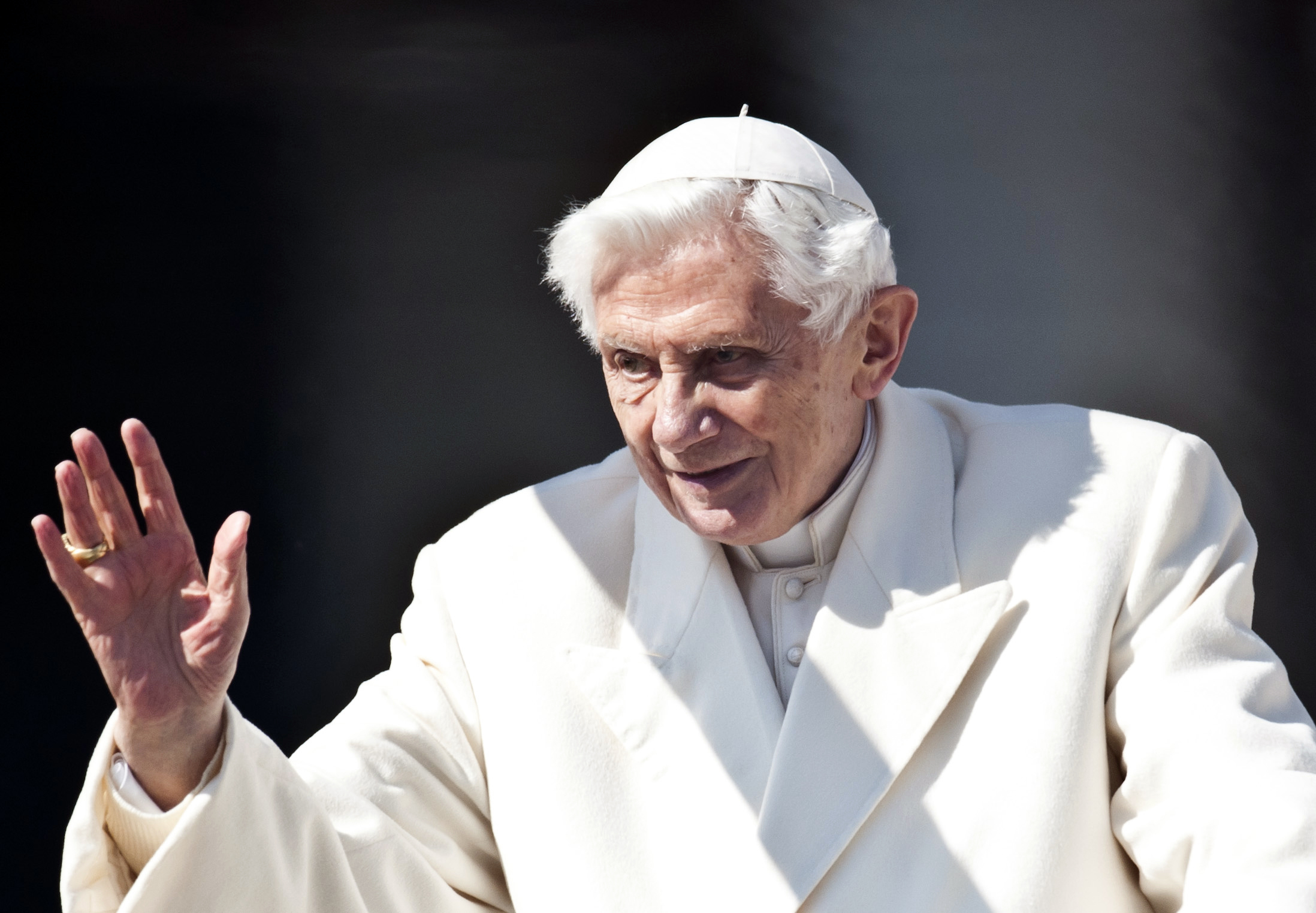
Pope Benedict XVI shocked the Church and the world at the Consistory on February 11, 2013, when he told the assembled cardinals, “After having repeatedly examined my conscience before God, I have come to the certainty that my strengths, due to an advanced age, are no longer suited to an adequate exercise of the Petrine ministry.” Benedict believed that his age and health had led to an inability to “adequately fulfill the ministry entrusted to me” and stated that “with full freedom I declare that I renounce the ministry of the bishop of Rome, successor of St. Peter.”
The pope specified that his abdication was effective at 8:00 P.M. on February 28, at which time the process to elect a new supreme pontiff could commence. Benedict chose the date to announce his abdication because it was halfway between Christmas and Easter and afforded the cardinals enough time to have a successor in place by Easter Sunday.
Although the faithful were stunned when the news was released, Benedict, in hindsight, had provided clues concerning his future decision.
On April 28, 2009, he visited the tomb of Pope St. Celestine V at the Basilica of Collemaggio in the town of L’Aquila, in a region that had been ravaged by a devastating earthquake. During the visit, Benedict told a group of volunteers, first responders, and military personnel that he had placed his papal pallium from his inauguration on the tomb of the thirteenth-century pope, who had abdicated the papacy after only five months in office.
Several months later, he authorized the Apostolic Penitentiary to grant a special plenary indulgence to those who visited and prayed at the tomb of this saintly pope during the Year of St. Celestine V (August 28, 2009-August 29, 2010), which was instituted to honor the 800th anniversary of the pope’s birth.
The next year, in 2010, Benedict visited the Cathedral of Sulmona, where he addressed a group of young people and encouraged them to further their devotion to Celestine. Benedict reflected on the need of the modern world to rediscover what Celestine knew and lived deeply—that is, “the ability to listen to God in external and above all internal silence. St. Peter Celestine was first and foremost this: a man of listening, of inner silence, a man of prayer, a man of God.”
Although Benedict’s resignation shocked the world at the time, papal abdication had occurred several times before him.
- The first papal abdication occurred in the third century, when Pope St. Pontian (r. 230-235) resigned the papacy before his exile to the salt mines of Sardinia by the Roman authorities.
- The eleventh century witnessed the bizarre case of Pope Benedict IX (r. 1032-1045, 1045, 1047-1048), the only man to reign three separate times as pope. Papal elections, heavily influenced by local Italian noble families, were farcical events, and the papacy itself was embroiled in a game of power politics. When Pope John XIX (r. 1024-1032) died, his nephew was elected pope, taking the name Benedict IX. The young man’s lifestyle was ill suited to the clerical state, and, restless with papal duties, he abdicated the throne, allegedly to marry his cousin. Gregory VI (r. 1045-1046) was elected, but the former pope soon tired of his non-papal life and returned to Rome, demanding re-instatement as supreme pontiff. Accused of simony, Gregory VI abdicated the papacy, and Clement II (r. 1046-1047) was elected as successor, but upon his death, Benedict IX managed to return to the papacy.
- In the thirteenth century, Pope Celestine V (r. 1294) reigned for a brief five months before his abdication. The simple hermit-turned-supreme pontiff quickly realized his inadequacy for the demands of the office and resigned.
- Finally, the last pope to abdicate before Benedict XVI was Gregory XII (r. 1406-1415), who, in a final effort to heal the Great Western Schism, recognized the validity of the Council of Constance and then abdicated the papacy to make way for a new pope whom all Christendom would recognize (Martin V, r. 1417-1431).
Reaction to Pope Benedict XVI’s abdication at the time mostly centered on shock and sadness. Some critics believed that Benedict was betraying tradition and the memory of Pope John Paul II, who died in office despite serious health issues, which greatly limited his exercise of the Petrine ministry in his last years.
Regardless of the criticism, Benedict XVI abdicated on February 28, 2013. He remained in Rome, kept his papal name, adopted the title “Pope Emeritus,” and wore the customary papal white cassock but no longer exercised the authority of the Petrine office. He promised “unconditional reverence and obedience” to the future pontiff, who was elected on March 13, 2013, taking the name Francis.
As the years have progressed since his abdication and eventual death in 2022, the memory of Pope Benedict XVI has been attacked by some Catholics, who blame him for their disagreements with Pope Francis. In their minds, the problems associated with the Francis papacy could never have existed, because if Benedict had not abdicated, then Francis would never have been elected.
Proponents of this reasoning resort to the “Catholic” historical attack from an internal perspective rather than the common external attack seen with most canceled Catholic historical persons. However, the attack is unsustainable—after all, Benedict offered his full support to Francis, and there is no reason to believe that someone substantially different from or “better than” Francis would have been elected had Benedict stayed in office. There is not even any guarantee that Benedict, subjecting himself to the intense stress and pressure of the papacy, would have lived long past 2013, and thus Francis might have been elected anyway! So this attack is nothing more than an effort to cancel a humble, faithful, and dedicated son of the Church for the perceived problems of a successor.
The reasoning is infantile. And the denigration of Benedict XVI, one of the most gifted theologians of the past century, is no less shameful than the Enlightenment, secular, and Protestant historical attacks against Catholics of the past.
Did you enjoy this excerpt from Steve Weidenkopf's book, Canceled? Order your copy today!
Recent Posts
-
Worship and Apocalyptic Warfare
Having finished a full draft of this work, I began seeing other themes surfacing in the Book of Rev …Oct 20th 2026 -
What Is a Mortal Sin?
As St. John says, “All wrongdoing is sin, but there is sin which is not mortal” just as “there is s …Oct 15th 2026 -
Mother Teresa: All for Jesus
As we should expect, Mother Teresa’s idea of holiness was simple and direct. For her, sanctity begi …Sep 30th 2026