









The Philosophical Argument for the Unborn
The Philosophical Case
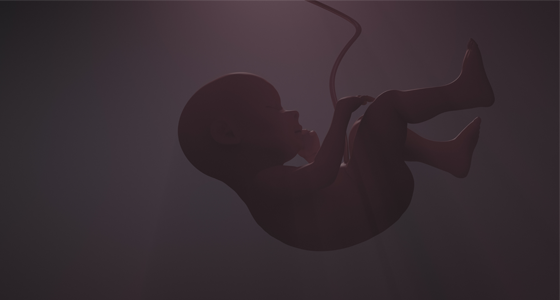
The philosopher Stephen Schwartz says there are only four differences between born and unborn humans, and none of them justifies depriving unborn humans of their basic rights, especially the right to life. Obviously, you and I have more rights than a fetus or an infant, such as the right to vote, but we all have the same basic right not to be tortured, enslaved, or unjustly killed. Schwartz uses the acronym SLED to summarize these differences between born and unborn humans and then shows that these differences do not justify saying born humans are persons, but unborn humans are not. They are
- Size
- Level of development
- Environment
- Degree of dependency
Just as we would ask a racist why skin color makes someone less valuable, we should ask pro-choicers why SLED differences make someone less valuable—or not a someone at all. The SLED critique follows this basic pattern:
- Affirm that the difference illustrated in the SLED acronym exists.
- Ask the critic what a person is or why this difference is what makes someone a person.
- Show that this difference has nothing to do with being a person, because some born people also differ in one or more of these ways.
Size
Katha Pollitt dismisses the value of the unborn because they are, according to her, “pea-sized,” “lentil-sized,” and “shrimplike.” Nathan Robinson says, “It is not hard to recognize that a cell barely visible to the naked eye is morally distinct from a live child.”
Obviously, there is a difference in size between newborns and embryos. They are distinct from one another. But is it a moral distinction? To answer that question, we must ask why the embryo’s size changes his moral worth. I know the difference between an adult woman and a premature infant who is smaller than a football, but I also know that both are equally human even if they are unequal in size. That’s because size is irrelevant to the issue of human value.
Sometimes, when issues related to “size” come up, the pro-choicer is really talking about appearance. He might say an early embryo simply doesn’t “look human.” But the idea that humans must look a certain way in order to be considered persons is a bigoted idea.
For example, in the early twentieth century, small African pygmies were put on display in human zoos. This was considered acceptable because pygmies did not “look human,” or they did not have white skin and European facial features. Of course, African pygmies looked just like how humans are supposed to look who live in a certain geographical region of the world. Likewise, a one-celled zygote looks just like how a human is supposed to look who lives in the womb at that stage of development.
Another reason human appearance is a bad criterion for personhood is that robots and mannequins can be designed to look human even though they are not human. Also, aliens and angels may not resemble human beings, but they would still be persons. This all shows that our size and our appearance are not relevant to what makes something a person.
Level of development
Atheist Richard Dawkins says abortionists are obviously persons, whereas the unborn are not, because “an early embryo has the sentience, as well as the semblance, of a tadpole. A doctor is a grown-up, conscious being with hopes, loves, [and] aspirations.” However, arguments like Dawkins’s that disqualify unborn children based on their level of development have at least one of these three flaws:
- They set the level of development too low so that non-human animals are persons.
If merely being able to feel pain made something a person, then many non-human animals would be persons. This includes pests we regularly kill like rats, and so fumigating dozens of them would be an act of mass murder. But since rats and similar creatures aren’t persons, it follows that feeling pain is not what makes something a person.
- They set the level of development too high so that infants are not persons.
Some pro-choicers say a person is anyone who can not only feel pain, but also exhibit rationality, or thinking beyond the level of non-human animals. And it’s true that unborn children can’t do that, but neither can newborn infants. But since nearly everyone believes that newborn infants are persons, this shows that having the immediate ability to think rationally is not what makes something a person.
- They make the level of development arbitrary in order to exclude the unborn.
If a pro-choicer says a person is any human being that can feel pain, then ask him why feeling pain matters, since non-human animals that feel pain (like rats) aren’t persons. Since pain didn’t matter when rats were involved, it’s clear this definition was created simply to disqualify the unborn. Also, saying a person is any “human living outside the womb” is as prejudiced as saying a person is any “human who is white” or any “human who is male.” Why not just say all humans are persons?
However, when we critique pro-choice definitions of personhood, we need to use noncontroversial examples. If a pro-choicer says a person is anyone who can feel pain or think, it’s not wise to ask in response, “But what about permanently comatose human beings who will never think or feel again? Are they persons?” The pro-choicer might simply reply, “No, the irreversibly comatose are not persons.”
That’s why in nearly all my examples, I use newborn infants: because (1) they are close in age and level of development to fetuses and (2) almost everyone agrees that it is wrong to kill newborn infants. As a result, if we can show that human embryos and fetuses do not differ in any relevant way from human infants, then we can direct people’s natural moral outrage against infanticide toward abortion as well.
Environment
Pro-choicers sometimes say the unborn aren’t “in the world yet” (i.e., they aren’t born), and so it’s not wrong to abort them. But why does a person have to be alive in a certain environment in order to be a person?
Keep in mind that women are not merely environments, locations, or vessels that carry an unborn child. Instead, a woman’s body represents intimate space that is shared with another human being. If, when we’re outside the womb, moving from one place to another does not take away our personhood, then how could moving from inside to outside the womb cause someone to become a person?
Even pro-choice philosophers like Peter Singer recognize the absurdity of basing a being’s value on its location. He writes, “Pro-life groups are right about one thing: the location of the baby inside or outside the womb cannot make such a crucial moral difference. We cannot coherently hold that it is all right to kill a fetus a week before birth, but as soon as the baby is born everything must be done to keep it alive.”
You can also point out that birth isn’t special to humans and that if the process of birth doesn’t turn a dog or a cat into a person, why would it turn a human into a person? If your pro-choice friend says birth just is what makes a human a person, ask him why that same argument couldn’t also be used to claim that another irrelevant trait, like having a Y-chromosome, just is what makes a human a person.
Some pro-choicers say birth makes people because we celebrate birthdays, not conception days, and it is only after birth when a child becomes a citizen and is issued official state documentation, such as a Social Security number.
But aside from the fact that it can take several weeks to get a Social Security card (thus allowing for infanticide), there are millions of immigrants in America who do not have things like Social Security cards, yet they are still persons. And we celebrate birthdays because no one knows exactly when he was conceived. Birthdays celebrate when we met our parents, when other people could see us outside the womb, and when our relationship with our mother changed, not when we began to exist. Although, I know some pro-life advocates who celebrate their approximate conception day. Catholics alsocelebrate the day Jesus was conceived (the Annunciation) and the day Mary was conceived (the Immaculate Conception).
Ben Bayer argues for abortion until the moment before birth because “it’s the point at which a child first exists: a new being, physically independent of the mother. A child is no longer a necessary physical burden on or potential threat to the mother’s life. Only then can she have no right to destroy it, and its right to live begins.”
First, birth is a process, so is Bayer saying that unless a child is completely born, he is not a person? Could the child’s head be kept in the birth canal so that the abortionist can kill the child by jamming a pair of scissors into his brain? (For more on this horrifying abortion procedure, see chapter 13.) Bayer’s argument also fails because a breastfeeding infant is also physically dependent on his mother (or someone else), but that doesn’t mean he is not a person. His claims that at birth a “new being” exists are simply assumptions without evidence (and incorrect ones at that).
Finally, Bayer’s argument leads to a conclusion about human embryos he would probably reject. He writes, “Neither a fetus nor an embryo is an individual in any relevant sense. Neither is physically or physiologically individuated from the pregnant woman.” Bayer claims that this individuation happens not at viability (or when a fetus can survive outside the womb), but at birth because the child is no longer inside the woman’s body. But by that logic, a human embryo produced through IVF would be a person since it is “physically or physiologically individuated from the pregnant woman,” and so it would be murder to intentionally destroy it.
However, Bayer might say the IVF embryo is not a person because a person is something that can “act independently.” He says, “The fetus doesn’t need protection for its ability to act independently—it has no such ability.” But neither do newborn infants, and if they are persons in spite of their helplessness, then so are unborn children—including those who exist the moment before being born.
Ultimately, birth does not change our personhood, since birth involves a change only of location, and where you are does not determine what you are.
Degree of dependency
A pro-choicer could respond to the last argument by saying that at birth, what changes isn’t the unborn child’s location, but the fact that he no longer needs the woman’s body in order to survive. However, a fetus can survive outside a woman’s body several months before the traditional time of birth. The earliest time a newborn can survive outside the womb is called viability, and it is usually dated in the United States at around twenty-four weeks after conception.
Even pro-choicers have noted how arbitrary it is to set personhood at a point like viability, which constantly changes because of developments in technology. If viability determined personhood, then some poor humans would not be persons simply because they lived in a place where it is more difficult to deliver premature babies. Underdeveloped technology might not be able to help a person, but that fact alone shouldn’t determine if someone is a person. That’s why Dobbs said, “The arbitrary viability line, which Casey termed Roe’s central rule, has not found much support among philosophers and ethicists who have attempted to justify a right to abortion.”
That’s why when people propose viability as the time fetuses become persons, we should ask: why does a child’s ability to survive outside the womb make him a person?
Rats can survive outside a uterus, but they aren’t persons. Newborns cannot live on their own outside the womb; they would be dead in a few hours or days if left on a hospital table. If the pro-choicer says that a person is someone who can survive outside the womb even with assistance, then once again, he is just asserting that the unborn are not persons. Why does “assistance” after birth have nothing to do with personhood, but “assistance” before birth proves you’re not a person?
Or suppose aliens abducted earthlings and put them on Mars, where they would immediately suffocate. What if the Martians defended their actions by saying that humans are not “viable,” and so they are not persons? Of course, this would only prove that humans aren’t “viable” in a certain environment, not that they aren’t persons at all.
Defining personhood through viability involves an invalid, circular argument:
Premise 1: A person is any human being who can survive outside the womb.
Premise 2: A fetus cannot survive outside the womb.
Conclusion: Therefore, a fetus is not a person.
But “who can survive outside the womb” is the same as “not a fetus,” so the argument basically says,
Premise 1: A person is any human being who is not a fetus.
Premise 2: A fetus is a fetus.
Conclusion: Therefore, a fetus is not a person.
This argument merely assumes that the unborn aren’t persons. It hasn’t given any reason to think viability is an essential part of what it means to be a person.
In fact, the idea that the unborn are not persons because they are dependent contradicts our moral intuitions. For example, acts of violence against innocent adults are wrong, but nearly everyone thinks those same crimes are even worse when committed against infants. This intuition comes from the fact that infants are so dependent on others and cannot protect themselves. But if it is worse to harm an infant because he is so helpless, then wouldn’t it be worse to kill a human being who is even more helpless than an infant, such as a fetus or an embryo? That’s why degree of dependency is irrelevant to what makes human beings valuable.
Recent Posts
-
Worship and Apocalyptic Warfare
Having finished a full draft of this work, I began seeing other themes surfacing in the Book of Rev …Oct 20th 2026 -
What Is a Mortal Sin?
As St. John says, “All wrongdoing is sin, but there is sin which is not mortal” just as “there is s …Oct 15th 2026 -
Mother Teresa: All for Jesus
As we should expect, Mother Teresa’s idea of holiness was simple and direct. For her, sanctity begi …Sep 30th 2026